英検®準1級の二次試験・面接対策
Booking the Community Hall
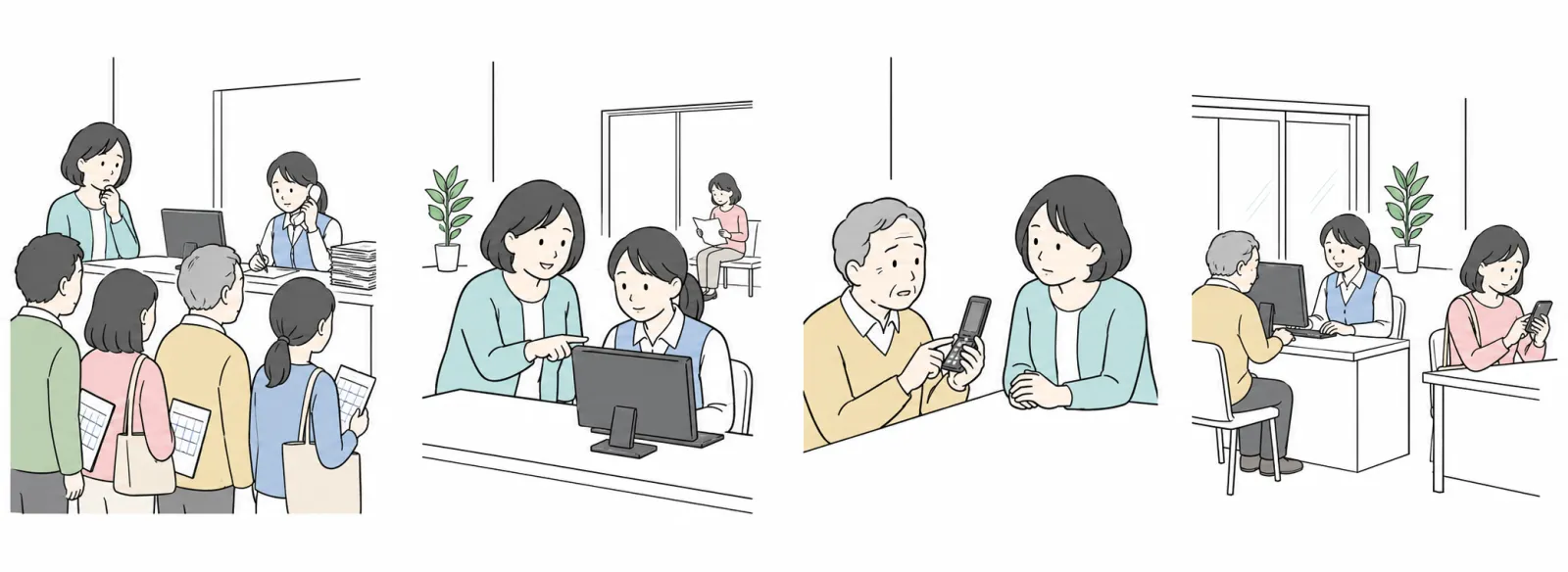
Your story should begin with this sentence: One day, a community hall manager named Ms. Tanaka noticed a long line at the booking desk. (書き出しの文)
入室から退室まで12の手順
線が太い手順は、問題カードを見ながら答えます。No.2からはカードを裏返すので、絵は見られません。
- 01
入室
面接委員Hello. Please come in.
回答例Hello.
- 02
面接カードを渡す
面接委員May I have your card, please?
回答例Here you are.
- 03
着席
面接委員Please have a seat.
回答例Thank you.
- 04
氏名の確認と挨拶・簡単な会話
面接委員Could you tell me your name?
回答例My name is Haruka Mori.
面接委員This is the Grade Pre-One interview. Is that correct?
回答例Yes, it is.
面接委員How has your day been so far?
回答例Good, thank you. I took a short walk before coming here.
- 05
問題カードを受け取る(カードを見られる)
面接委員Here is your question card.
回答例Thank you.
- 06
ナレーションの考慮時間(カードを見られる)
面接委員Read the instructions and look at the four pictures. You have one minute to prepare.
考慮時間 60秒 - 07
ナレーション(カードを見られる)
ナレーションTell the story using the opening sentence on the card. You have two minutes.
回答例を見る話す 2分 - 08
Q&A No.1(カードを見られる)
No.1Look at the third picture. If you were Ms. Tanaka, what would you be thinking?
回答例を見る - 09
問題カードを裏返す
面接委員Please turn the card over.
- 10
Q&A No.2〜No.4
No.2Do you think public facilities should continue accepting bookings in person?
回答例を見るNo.3Should public facilities ask users to test new services before introducing them?
回答例を見る面接委員Many services are moving online to reduce administrative costs.
No.4Do you think governments should guarantee a non-digital way to use essential public services?
回答例を見る - 11
カードを返す
面接委員That is the end of the interview. Please return your card.
回答例Here you are. Thank you.
- 12
退室
面接委員Thank you. Goodbye.
回答例Thank you. Goodbye.
このカードの答え方
予約のデジタル化と窓口対応を扱います。3コマ目では担当者の立場になり、便利さの裏で困っている利用者に目を向けます。
- ナレーション · 4コマの展開を説明
Tell the story shown in the four pictures. Begin with the opening sentence. You have two minutes.
ポイント 各コマの出来事を過去形でつなぎ、問題・対応・残った問題・見直しまで話します。
回答例- 1コマ目
One day, a community hall manager named Ms. Tanaka noticed a long line at the booking desk. The worker behind the desk was talking on the telephone. Several visitors were waiting with papers in their hands, and Ms. Tanaka looked concerned.
- 2コマ目
A month later, Ms. Tanaka and the worker were looking at a computer together. The manager pointed toward the screen. There was no longer a line behind them, and one visitor was sitting on a chair farther back.
- 3コマ目
The following week, an older man showed Ms. Tanaka a small folding mobile phone. He pointed at it while she listened with a worried expression. It seemed that he needed some help.
- 4コマ目
Later, the man was sitting at a desk with the worker. She was helping him face to face, while another visitor used a smartphone at a separate desk. Both ways of getting help were available in the room.
- 書き出しの文
- No.1 · 仮定の質問
Look at the third picture. If you were Ms. Tanaka, what would you be thinking?
ポイント I would be thinkingに続けて、指定された人物の困り事と次の行動を話します。
カードの絵回答例I would be thinking, "This man looks confused about the computer. I should sit with him and show him what to do, so he can get the help he needs."
- No.2 · 意見
Do you think public facilities should continue accepting bookings in person?
ポイント カードの出来事から少し広げ、質問の対象に合う理由を述べます。
回答例Yes. Online booking is convenient for many people, but it should not be the only option. Some residents do not have suitable devices or need help understanding the choices. A limited period for in-person bookings could support them without keeping the desk open all day.
- No.3 · 意見
Should public facilities ask users to test new services before introducing them?
ポイント 賛否だけで止めず、実行するときの条件を1つ添えます。
回答例Yes. Staff may understand a system so well that they overlook confusing steps. Asking different users to try it could reveal those problems early. The test should include people who rarely use digital services, since confident users will not notice every difficulty.
- No.4 · 意見
Many services are moving online to reduce administrative costs. Do you think governments should guarantee a non-digital way to use essential public services?
ポイント 導入文で社会的な論点をつかみ、最後の質問に自分の立場を示します。
回答例Yes. Access to essential services should not depend entirely on owning a smartphone. People may also lose internet access during a disaster. Governments could offer telephone support or local assistance points, even if routine applications are mainly handled online.
準1級の点数の見方
練習用の配点で、各項目の重さを表しています。本番の合否はCSEスコアで決まり、素点からの換算表は公表されていません。
- 15ナレーション
- 5No.1
- 5No.2
- 5No.3
- 5No.4
- 3アティチュード
Could you say that again, please?
自然な聞き返しは減点の対象になりません。不自然な聞き返しや繰り返しの聞き返しは減点の対象です。公式は「1回だけ」とは定めていません。
素点からCSEへの固定換算表は公表されていません。合格率やCSE予測値は表示せず、回答の内容と改善点を返します。
英検 二次試験の級
準1級のカード一覧
公開されている形式を参考にしたオリジナル問題です。過去問の転載ではありません。
- カード1Booking the Community Hall予約のデジタル化と窓口対応を扱います。3コマ目では担当者の立場になり、便利さの裏で困っている利用者に目を向けます。
- カード2A Shared Kitchen after Work夜の共同キッチンと近隣の騒音を扱います。利用者と住民のどちらかを悪者にせず、変えられる行動を示します。
- カード3Deliveries during School Hours学校への配送時間をまとめる話です。効率だけで判断せず、授業に必要な例外をどう扱うか考えます。
- カード4A Machine at Receptionホテルの自動受付を扱います。機械の利点を認めたうえで、人の対応が必要になる条件を説明します。
- カード5Tablets for a Reading Group読書会のタブレット導入が題材です。読みやすさと操作上の困り事を別々に説明し、解決策までつなぎます。
- カード6Points for Volunteeringボランティアのポイント制度を扱います。参加人数だけで成功と判断せず、残った作業を具体的に説明します。
- カード7Sensors in the School Garden花壇のセンサーが題材です。数値と実際の植物が食い違う理由を、センサーの位置から説明します。
- カード8A Path to the Beach海岸のバリアフリー通路が題材です。設置と維持管理を分け、強風後の変化を具体的に話します。
- カード9A New Rubbish Collection Timeごみ出しの時間を変える話です。清潔になった結果と、早朝出勤者が守れない理由の両方を伝えます。
- カード10Welcoming a Remote Intern遠隔インターンの情報共有を扱います。本人のミスと決めつけず、変更が伝わらなかった流れを説明します。
この順番で練習します
- 01
面接の形式と進む順番
No.1はカードを見て答え、その後カードを裏返してNo.2〜4へ進みます。2024年度からNo.4に話題導入文が加わりました。音読用のパッセージはありません。
- 02
ここで内容が足りなくなりやすい
ナレーションで対応後の問題を飛ばすと、4コマ目で見直す理由が分からなくなります。最初の問題、対応、新たな問題、再対応のつながりを追います。
No.1では指定された人物の立場で考えます。No.4は導入文だけに反応せず、最後に聞かれた社会的な問いを確認してから賛否を示します。
- 03
録音して答え直す練習
1分で4コマ全部を見て、各コマの主語と動詞を頭の中に置きます。書き出しを使って録音し、2分以内で最後の変化まで伝わるか聞き直します。
意見は理由を2つ考え、重複していないか確かめます。費用と使いやすさなど別の影響を選び、反対意見には試行や例外条件を添えて答えます。 点数は練習用の配点で表示します。公式の成績やCSEスコアへの換算ではありません。
よくある質問
続けて読む
英検®は、公益財団法人 日本英語検定協会の登録商標です。このコンテンツは、公益財団法人 日本英語検定協会の承認や推奨、その他の検討を受けたものではありません。